





Table of Contents
Expertise & Trust: Op. Dr. Ali Cihan Yiğiter (Born 1984, Kaş/Antalya) graduated from Ege University Faculty of Medicine in 2008 and completed ENT (Otorhinolaryngology–Head & Neck Surgery) specialization in 2013. In 2015, he performed facial rejuvenation and facial plastic surgery on cadavers at Hamburg Universität Klinikum Eppendorf (UKE) under the Facial Plastic Surgery Association. With 15+ years of experience and 3000+ rhinoplasty procedures, he focuses on functional and aesthetic nose surgery, sinus surgery, pediatric ENT, OSAS surgery, and injectables. Member of EAFPS (European Association of Facial Plastic Surgery), Turkish Facial Plastic Surgery Association, and Turkish Otolaryngology Foundation.
Free Pre‑Assessment: Share your symptoms + medical history on WhatsApp. We’ll review your case and outline a personalised plan with travel timing.
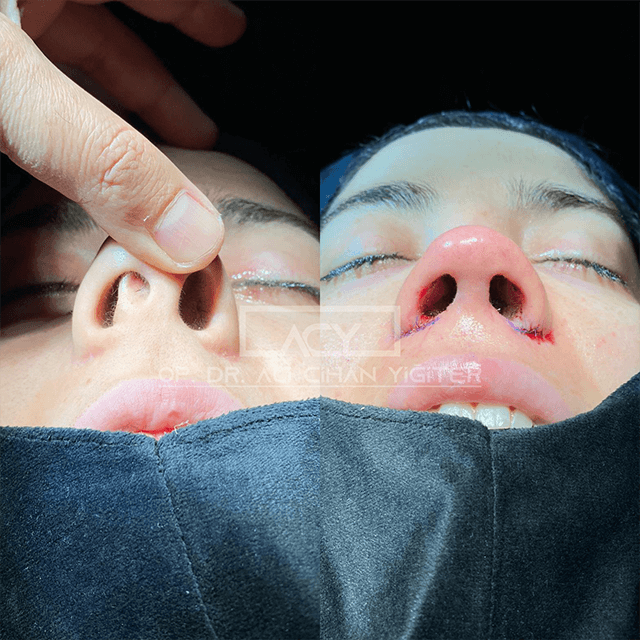
What Is Septoplasty and What Problems Does It Solve?
“Will septoplasty fix my breathing without changing how my nose looks?”
Septoplasty is a functional operation that straightens the deviated nasal septum to improve airflow. It does not aim to change the outer appearance of the nose. If you also want cosmetic refinement, combining procedures as septorhinoplasty can address both breathing and aesthetics in one session.
Who Is a Good Candidate for Septoplasty?
- Chronic nasal blockage and mouth‑breathing
- Poor sleep quality, snoring, daytime fatigue
- Recurrent sinusitis, facial pressure/headache
- Insufficient response to sprays/medications
- Typically 17+ years old (younger patients may be considered if symptoms are severe)
Pre‑Op Evaluation: What Tests and Checks Will I Need?
“Do I need scans? What about my blood thinners?”
- ENT exam + nasal endoscopy: Detects septal deviation, turbinate hypertrophy, polyps, sinus disease.
- Imaging if needed: Sinus CT helps in complex cases or when sinusitis is suspected.
- Blood tests & anaesthesia clearance: Routine labs for safe general anaesthesia.
- Medication adjustments: Aspirin/anticoagulants are typically stopped 7–10 days pre‑op (only with physician approval).
- Smoking: Stop ideally 2 weeks before surgery to reduce bleeding and improve healing.
Pre‑Op Checklist: Send your medication list, allergies, and past surgeries via WhatsApp. We’ll confirm the safest pre‑op plan and fasting instructions for surgery day.
Septoplasty Techniques Comparison
| Technique | How It’s Done | Pros | Cons | Best For |
|---|---|---|---|---|
| Endoscopic Septoplasty | Camera-assisted, targeted correction through the nostrils. | Minimal trauma, precise correction, faster recovery. | May be limited in extensive bony deviations. | Segmental deviation, posterior septal issues. |
| Conventional (Submucosal) Septoplasty | Mucosa elevated; deviated cartilage/bone reshaped or resected. | Comprehensive correction for complex deformities. | More dissection; swelling/congestion can be more noticeable. | Broad/complex deviations. |
| Cartilage Reshaping & Grafting | Cartilage straightened; support grafts added if needed. | Prevents collapse/recurrence; robust airway. | Longer time; rare graft-related issues. | Weak septum, revision cases. |
| Inferior Turbinate Reduction (If Needed) | Radiofrequency/microdebrider to shrink enlarged turbinates. | Extra airway gain; better symptom relief. | Risk of dryness/crusting if over-reduced. | Concha hypertrophy accompanying deviation. |
← Scroll to see more
What to Expect on the Day of Surgery?
- Duration: ~30–60 minutes
- Anaesthesia: Usually general anaesthesia
- Incisions: Inside the nose (no visible external scars)
- Internal splints: Silicone splints commonly used; allow some airflow
- Discharge: Same day or 1‑night observation
Recovery Timeline (Day-by-Day & Week-by-Week)
| Timeframe | What You May Feel | Care Tips |
|---|---|---|
| Day 0–1 | Mild pain, fullness, light oozing | Rest with head elevated; cold compress to cheeks/upper lip |
| Day 2–3 | Congestion/oozing can continue | Saline sprays for moisture; avoid nose blowing |
| Day 4–7 | Clinic visit; splints typically removed | Short walks OK; avoid straining/coughing |
| Week 2 | Breathing quality starts to improve | Light exercise may resume (doctor-approved) |
| Weeks 3–4 | Less swelling; comfort improves | Gradual return to moderate exercise |
| Week 6+ | Airway stabilises; near-final function | Contact sports only with doctor’s clearance |
← Scroll to see more
UK/EU Travel Tip: Most patients are fit to fly around day 7–10 after splint removal. Always confirm your flight with your surgeon. WhatsApp aftercare. Plan your dates with us.
Post‑Op Do’s & Don’ts
- Avoid heavy exercise and weight lifting for 2 weeks
- No sauna, very hot baths, or very hot drinks in the first days
- Keep the nose moist with saline; do not pick crusts
- Protect from accidental bumps (be careful with kids/pets)
- Ask your surgeon before flying
Are the Results Permanent? Can Deviation Come Back
Septoplasty corrections are generally long‑lasting. Rarely, significant trauma or structural weakness may alter results over time. If needed, a revision plan is tailored to the individual.
Step-by-Step Journey for UK/EU Patients
-
Pre-assessment
Send medical history and symptoms via WhatsApp.
-
Flights & hotel
Set dates for Antalya; we can advise if needed.
-
Clinic visit & planning
Endoscopy; scans if indicated.
-
Surgery
Same/next day; short observation.
-
Check-ups
Dressing on day 3–5; splints ~day 5–7.
-
Return
Fly once cleared; ongoing WhatsApp aftercare on your return.
Combining Functional and Cosmetic Goals
If you also want shape refinement, septorhinoplasty treats function + aesthetics in one session, meaning one anaesthesia and a unified recovery. For tip‑only refinements, consider tip plasty. For precise bone work, ultrasonic (Piezo) rhinoplasty can be beneficial.
Risks & Possible Complications
- Bleeding, infection, temporary smell changes
- Rare: Septal haematoma, perforation, adhesions
- In structurally weak septa: risk of collapse (support grafts reduce this)
Choosing an experienced ENT surgeon and following aftercare instructions help minimise risks.
Why Do UK Patients Choose Turkey for Septoplasty?
- Experienced Surgeon: 15+ years of expertise, 3000+ nasal surgery cases.
- Modern Hospitals: Advanced anesthesia and sterilization protocols.
- International Patient Support: Translation, airport transfer & WhatsApp aftercare.
- Comfort in Antalya: Pleasant climate, easy travel & accommodation.
FAQ
What’s the difference between septoplasty and rhinoplasty?
Will it be painful?
Will I have nasal packing? Can I breathe?
How long do splints stay in?
When can I go back to work?
When can I exercise?
When can I fly back to the UK?
Will septoplasty change how my nose looks?
Can septoplasty help with sleep apnea (OSAS)?
I have allergies—can I still have surgery?
Is dryness and crusting normal?
What is a septal perforation, and is it likely?
Could blockage return in the future?
Can teenagers undergo septoplasty?
Should turbinate reduction be done at the same time?
Will my sense of smell change?
Can I combine septoplasty with cosmetic refinements?
Yes—this is septorhinoplasty. One anaesthesia + one recovery.
Consultation Request Form